Search This Blog

Tuesday, December 31, 2024

The Boer Wars

The Boer Wars were two wars fought between the South African Boers (Farmers) and the British Empire.

Who Were the Boers?

"Boer" (pronounced "bu-ruh") is the Dutch and Afrikaans word for "farmer." The Boers were settlers of French (Huguenot), German, and predominantly Dutch origin who began settling in South Africa during the period of the Dutch Cape Colony. They established a settlement at present-day Cape Town in 1652 under the Dutch East India Company (VOC).

From the outset, the Boers interacted with various local African groups, including such as the Khoikhoi, San and Xhosa

The British Empire always had an eye on the location, recognizing the strategic importance of the Cape as a maritime waypoint to India, and sought control of the region early on attempting to establish a settlement near Capetown. Although the Dutch established their presence in 1652, British merchants continued to use the Cape for trade.

During the Napoleonic Wars, the British formally seized the Cape Colony in 1806, motivated by the Netherlands’ alliance with France under Napoleon. In 1814, the Treaty of Vienna ceded the Cape to Britain permanently.

The Great Trek and the Voortrekkers

The Boers took issue with many of the British and felt alienated. The British abolished slavery in 1834 disrupting the Boer economy. The Afrikaaners felt culturally alienated from the British as well.

A map of the world

AI-generated content may be incorrect.

This dissatisfaction led to the Great Trek (1830s-1840s), a mass migration of Boer families, known as the Voortrekkers (“pioneers”), into the South African interior. The Voortrekkers sought autonomy and new lands for farming, free from British interference.


Long shot of a wagon

AI-generated content may be incorrect.

Development of the Boer Republics

Following the Great Trek, the Boers established independent republics: Transvaal (South African Republic) and the Orange Free State: Established in 1854.

These republics were predominantly agricultural and fiercely independent, existing in uneasy proximity to British-controlled territories.

First Boer War (1880-1881): The discovery of diamonds in Afrikaaner lands lead to increased British interest. British Empire attempts to annex the Transvaal which provoked resistance, the Boers waged guerrilla war successfully and the Biritish allowed the South African Republic to regain self-government under British suzerainty.

A group of men shooting horses

AI-generated content may be incorrect.

Second Boer War (1899-1902): Tensions escalated over control of gold and diamond resources in and influxes of gold searching immigrants in Afrikaaner lands stoked tensions.  Boer territories, as well as British imperial ambitions.

Diplomatic tensions escalated following the failed Jameson Raid in 1895 spearheaded by colonialist adventurer Cecil Rhodes.

The inevitable war began in October 1899, when the Boer republics declared war on Britain after British troop buildups near their borders. In the early stages, the Boers used guerrilla tactics and besieged key British towns, achieving several successes. 

The Boers were much more efficient fighters, however eventually the British overpowered them through an influx of soldiers and from the crown. The British eventually adopted scorched-earth tactics burning farms and using the British burned farms and used concentration camps to control the Boer civilian population, where tens of thousands of civilians, particularly women and children, died due to poor conditions.

This was the first conflict in which barbed wire was extensively used, playing a strategic role bringing spaces under control, at military outposts as well as to hold the captured Boer population in concentration camps.

A group of soldiers in uniform

AI-generated content may be incorrect.


The war ended with the signing of the Treaty of Vereeniging on May 31, 1902. The Boer republics were incorporated into the British Empire, but the treaty promised eventual self-government, leading to the formation of the Union of South Africa in 1910. 
 

Sunday, November 17, 2024

When Alexander the Great Met Diogenes the Cynic

The year is 336 B.C. The place is the Greek city-state of Corinth in the suburb of Craneion and the sun was shining bright when Alexander III of Macedon met Diogenes the Cynic. Their interaction would spawn numerous paintings and philosophical and literary reinterpretations. Let’s introduce these two figures of antiquity.

Alexander III of Macedon

In one corner, Alexander III of Macedonia. This was the year that his father, King Phillip II, was assassinated, and he ascended as ruler of the Macedonian empire.

He is twenty years old and already a formidable military figure. Standing at an average Ancient Greek height of 5 feet, he is stocky and has a fair complexion and medium-length hair. He is average-looking physically, but well-built and dressed not only as a king with a cape but in the armor of a conqueror.

Alexander is going on a tour of city-states, accepting oaths of fealty and has reached Corinth. He is already the most powerful man in Greece and is in the process of unleashing a tidal wave of conquest that will envelop much of the Middle East.

Alexander and his procession are marching down the streets of Corinth. Statesmen, philosophers, and common citizens grovel and congratulate their new king. However, one man remains unfazed by the cavalcade. Lying on the floor in the afternoon sun is one of the most colorful philosophers of the city: Diogenes the Cynic.

Diogenes of Sinope

The second actor in this story is Diogenes of Sinope. He is the son of a banker of Sinope in modern-day Turkey. His father became embroiled in a scandal that likely involved counterfeit money and was banished from Sinope. It is likely that Diogenes himself was involved in his father’s business and was exiled. Making his way to Athens, Diogenes pestered the philosopher Antisthenes, an ascetic pupil of Socrates for his tutelage, and soon the two figures began developing the early streams of Cynic philosophy.

Diogenes is not a fan of Plato and thinks him to be too needlessly abstract, instead, to him and many of the Cynic philosophers virtue is promoted through action and harmony with nature. Social constraints and the desires that society imposes are to be rejected.

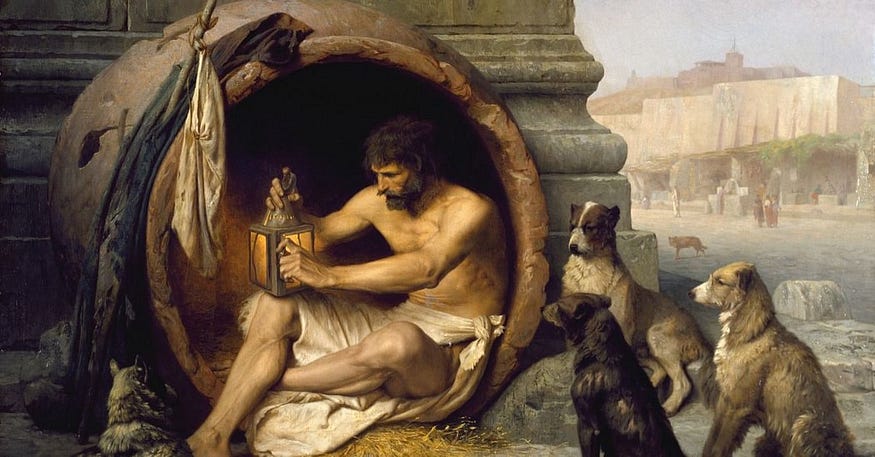
During this encounter, Diogenes is roughly seventy years old, wearing simple garments, he has rejected worldly possessions and chooses to live a life opposing society’s influence. Because of this, he does everything he needs to do in the streets.His only consistent abode was a ceramic tub, which he eventually destroyed because he thought it superfluous. He has several dogs to keep him company and often emulates their actions more than humans. Disheveled and dirty, Diogenes the Cynic is found in the streets of Corinth sunbathing when he is approached by Alexander and his posse.

Diogenes Sitting in His Tub|Jean-Léon Gérôme, 1860

The Encounter

Alexander the Great, likely slightly discontented that one of the most prominent philosophers of this city had not paid him much notice, approaches the old man and declares “I am Alexander the Great King,” Diogenes looks up and responds, “I am Diogenes the Dog.”

Alexander then proceeds to ask Diogenes if he desires anything. Knowing that Alexander is the most powerful man he would ever meet, Diogenes replies, “Yes. I would like you to stand a little out of my sun.”

Alexander’s men proceed to hurl insults at the philosopher, but Alexander is reportedly so stunned by this interaction and in awe at Diogenes' attitude, that he later says to his close companions “But truly, if I were not Alexander, I wish I were Diogenes.”

Another version of the anecdote has Diogenes contemplating a pile of human bones. The philosopher says, “I am looking for the bones of your father, but I just can’t tell them from the slaves.”

Alexander and Diogenes|Gaetano Gandolfi, 1792

The Significance of the Interaction

During the Middle Ages, this anecdote gained considerable notoriety as the teachings of the ancient Greeks became more popular.

The duality between the two men is often highlighted in the interpretations, Alexander being a conqueror not satisfied till he conquers the world, while Diogenes the contented vagrant is satisfied with simple earthly pleasures. This event was used largely to demonstrate the material limitations of man.

Although Alexander could have probably given Diogenes anything reasonable, he could not give him the time Diogenes lost in the sun. However, this anecdote also shows Alexander as a tolerable and respectable king opting to praise and commend the philosopher for his virtue rather than reprimand him for his insolence, further cementing Alexander as a great king.

This interaction also gets interesting when you learn that Alexander and his followers would frequently refer to him as the son of Zeus. Coins with Alexander’s face also had the signature Herculean symbols of spiked clubs and lions etched to further his image as the mythical son of Zeus. This was not fully dishonest because during this period it was believed that the gods came down to earth and had children, and a sign that you were a descendant of a god was typical that you had good luck, which Alexander had in buckets.

However, when you translate Diogenes’s name from Ancient Greek it literally means born of Zeus. Alexander wanted to prove himself to the world through conquest and emulating the heroics of Achilles and Hercules, while Diogenes did not need anything to prove himself because his name already cemented that he had already attained a superior mode of contentment in his own life, one which Alexander was searching for.

Alexander and Diogenes as Dogs|Edwin Landseer, 1848

It must concluded that, like much ancient history, this anecdote is subject to debate regarding its veracity. Many believe that the anecdote is exaggerated, while some believe that it actually happened in India when Alexander interacted with the Gymnosophists, a group of naked ascetic philosophers. Still, the anecdote is a timeless demonstration of Diogenes’s Cynic philosophy and the limitations of material wealth and power.

Wednesday, August 21, 2024

Les Serments de Strasbourg; The Oaths of Strasbourg

 Les Serments de Strasbourg; The Oaths of Strasbourg


Français

Les Serments de Strasbourg étaient des serments qui dénotent une alliance militaire entre les deux frères, Charles le Chauve et Louis le Germanique, contre leur frère Lothaire Iᵉʳ. Tous les trois étaient des petits-fils de Charlemagne, et la division des territoires du Dynaste carolingien et l'autorité et pouvoir de l'héritier de l'empire carolingien était en question. 


Lothaire Ier, l'aîné des trois frères, revendique le titre d'empereur d'Occident, hérité de leur père Louis le Pieux et restauré par leur grand-père, Charlemagne. Charles et Louis refusent de le reconnaître comme leur suzerain. Lothaire tente d'envahir les États de ses cadets. 

Pour renforcer leur alliance, Louis le Germanique et Charles le Chauve se rencontrent en février 842 à Strasbourg et y prêtent serment contre Lothaire

Les Serments sont importants principalement parce que c'est a ce moment que la langue française est établie physiquement en manuscrit. 

Le manuscrit des serments était écrit en deux langues: le vieux haut allemand (theodiscus) et une langue Romance descendu du latin vulgaire qui dénote le développement de l'ancien français. 

Le proto allemand a été prêté serment par Charles le Chauve et ses soldats, et l'ancien français par Louis le Germanique, en montrent du respect aux deux langues et peuples. 


English

The Oaths of Strasbourg were oaths that denoted a military alliance between the two brothers, Charles the Bald and Louis the German, against their brother Lothair I. All three were grandsons of Charlemagne, and the division of the territories of the Carolingian Dynasty and the authority and power of the heir to the Carolingian Empire was in question.

Lothair I, the eldest of the three brothers, claimed the title of Emperor of the West, inherited from their father Louis the Pious and restored by their grandfather, Charlemagne. Charles and Louis refused to recognize him as their overlord. Lothair attempted to invade the states of his younger brothers.

To strengthen their alliance, Louis the German and Charles the Bald met in Strasbourg on February 842 and swore an oath against Lothair.

The Oaths are important primarily because this is when the French language was physically established in manuscript. The manuscript of the oaths was written in two languages: Old High German (theodiscus) and a Romance language descended from Vulgar Latin that denotes the development of Old French.

The Old German was sworn by Charles the Bald and his soldiers, and the Old French by Louis the German to show respect for both languages ​​and peoples.

Here is an excerpt from the oaths.

Ancien Français/ Old French

Pro Deo amur et pro christian poblo et nostro commun saluament, d'ist di en auant, in quant Deus sauir et podir me dunat, si saluarai eo cist meon fradre Karlo, et in adiudha et in cadhuna cosa, si cum om per dreit son fradra saluar dift, in o quid il mi altresi fazet. Et ab Ludher nul plaid nunquam prindrai qui meon uol cist meon fradre Karle in damno sit.


Francais contemporain/Contemporary French 

Pour l'amour de Dieu et pour le peuple chrétien et notre salut commun, à partir d'aujourd'hui, autant que Dieu me donnera savoir et pouvoir, je secourrai ce mien frère Charles par mon aide et en toute chose, comme on doit secourir son frère, selon l'équité, à condition qu'il fasse de même pour moi, et je ne tiendrai jamais avec Lothaire aucun plaid qui, de ma volonté, puisse être dommageable à mon frère Charles.


Vieux haut allemand/Old High German

In Godes minna ind in thes christianes folches ind unser bedhero gealtnissi, fon thesemo dage frammordes, so fram so mir Got geuuizci indi mahd furgibit, so hald ih tesan minan bruodher, soso man mit rehtu sinan bruodher scal, in thiu, thaz er mig sosoma duo ; indi mit Ludheren in nohheiniu thing ne gegango, zhe minan uuillon imo ce scadhen uuerhen


Allemand contemporain/Contemporary German

Für die Liebe Gottes und des christlichen Volkes und unser aller Erlösung, von diesem Tage an, soweit mir Gott Wissen und Können gibt, werde ich meinem Bruder Karl beistehen, sowohl in der Hilfeleistung als auch in jeder anderen Angelegenheit, so wie man seinem Bruder beistehen soll, auf dass er mir genauso tue, und ich werde niemals ein Abkommen mit Lothar treffen, das willentlich meinem Bruder Karl zum Schaden sei.

Anglais/English

For the love of God and Christendom and our joint salvation, from this day onward, to the best of my knowledge and abilities granted by God, I shall protect my brother Charles by any means possible, as one ought to protect one's brother, insofar as he does the same for me, and I shall never willingly enter into a pact with Lothair against the interests of my brother Charles


From the text one can truly see the nature of how tied old French was to Latin. While German includes many loanwords of latin origin, the grammar and the syntax is differentiated from latin.

The Serments of Strasbourg lead to the subsequent formation of the Treaty of Verdun. A treaty which divided the Caroligian Empire into three territories o, for each of the brothers, Charles, Louis and Lothair. The linguistic divide of France and Germany solidified. 


Monday, August 19, 2024

En, Dans et Au en Francais

 En et au sont des mots différentes qui expriment des choses différentes. 


Les deux sont des prépositions qui ont des usages divers. 


Les deux sont utilisés comme des prépositions de lieux. 


En est plus proche du sens anglais de "in or on" donc est fréquemment interchangeable avec "dans" mais cette utilisation interchangeable est souvent une faux-amie. 

En c'est plutôt utilisé dans les sens suivants 

  • Utilisé pour indiquer une période de temps : "Je fini le livre en cinq heures." (Action déjà accomplie)
  • Utilisé pour exprimer un moyen de transport : "Je voyage en avion."
  • Utilisé avec certains noms de pays ou de régions : "Je vis en France."
  • Utilisé pour indiquer une manière ou une condition : "Il est en colère."
  • Alors que "dans"est utilisé...

  • Utilisé pour indiquer un lieu précis ou un espace fermé : "Il est dans la maison."
  • Utilisé pour indiquer une durée avant qu'une action ne se produise : "Je pars dans cinq minutes."
  • Utilisé pour indiquer une situation ou un contexte : "Il est dans une situation difficile."
  • Maintenant on se concerne de "au"

    Au c'est plus proche du sens anglais de "at or to".

    Au c'est une contraction des mots à et le: à +le =au

    J'y vais au magasin

    J'y vais à la plage


    En concernant les prépositions et les pays 

    En est utilisé si le pays est féminin "En France, En Italie, En Allemagne, En Suisse, En Chine, En Norvège, En Suède, En Russie, En Grèce" OU si le pays commence par une voyelle "En Afghanistan, En Angola, En Argentine, En Uruguay.


    Au est utilisé pour les pays masculins " Au Japon, Au Congo, Au Brasil, Au Portugal, Au Pakistan, Au Mexique, Au Mali, Au Maroc, Au Canada"

    Et aux est utilisé pour les pays pluriels en genre.

    POUR QUOI on n'utilise pas à la pour un pays feminine??? Si au est une contraction des mots à et le, pourquoi est-ce qu'on n'utilise pas à la? Il n'y pas une bonne raison à part que la prononciation est considéré comme plus mélodique et fluide en utilisant en comme préposition.


    Sunday, July 14, 2024

    Basque: The Language the Devil Couldn’t Learn

    Basque: The Language the Devil Couldn’t Learn

    Europe’s language unicorn

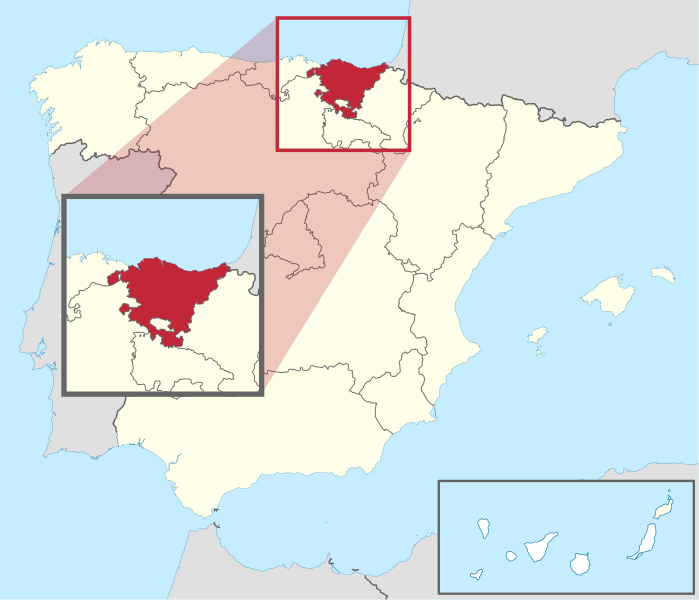
    Nestled between the westernmost point of the Pyrenees, straddling the border between France and Spain, the last pre-Indo-European language resides.

    The Basque language is so ancient and unique to its Romance neighbors of Spanish, French, and Occitan, that myth would have it that when the Devil wondered why there were no Basque-speaking people in Hell, he made the journey to the nestled community to convert the people, but the language proved difficult to learn, and he failed to corrupt the Basque people.

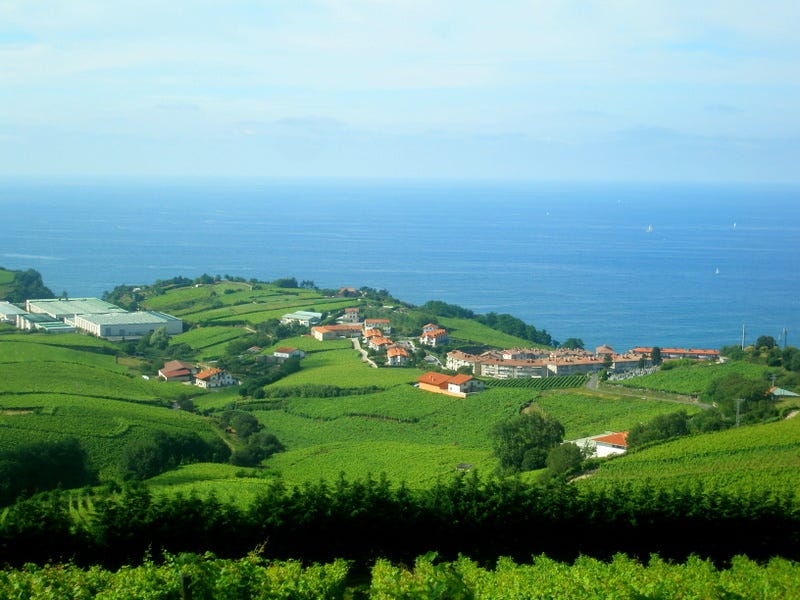
    Map of Basque Country| Wikicommons (Left); Basque Paysage| Wikicommons (Right)

    Features of the Basque language

    After researching Basque, the Devil’s difficulties laid upon my Anglo/Germanic/Romance brain.

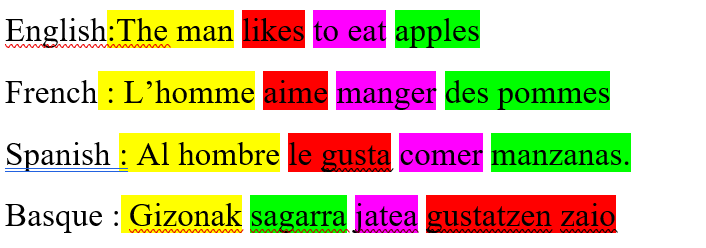
    Basque uses an ergative-absolutive grammatical alignment, an alignment that emphasizes the agent/subject of the action as the doer of the transitive action. In the example below, the subject in Basque — Gizona (man) becomes Gizonak demonstrating that it is the agent/subject of the transitive verb.

    A good explanation of Ergativity is here. https://www.youtube.com/watch?v=kFzt_GHNd1M

    Example Sentence|Public Domain

    In contrast to most Latin languages and English, where the word order typically is Subject-Verb-Object, Basque engages with Subject-Object-Verb, a structure more commonly seen in most of Asia. Furthermore, Basque is an agglutinative language, meaning it forms words and expresses grammatical relations by adding prefixes, suffixes, and infixes to root words. Syntax is also dictated by the purpose and tone of the phrase and the language has a rich case system.

    The Basque Language and Peoples

    Basque currently boasts 800,000 speakers and the etymological and cultural origins of Basque come from the Vascones, a term the Romans used for the people.

    The Basque people identify themselves and their language as Euskaldun and Euskara. There is no conclusive unearthing of a Basque writing system or alphabet before Latin and since Roman conquest, Basque has been written in the Latin script.

    For years, the Basque people maintained their own culture and language. They often cycled between being allied and antagonistic to the forces that surrounded their cultural enclave. Their culture was seen as pagan to Charlemagne and Christendom, as well as the Muslims during their rule of Iberia.

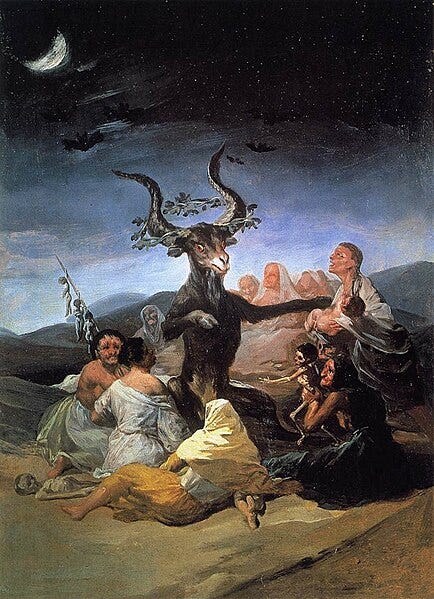
    Despite early Christian testimonies and institutional organization, Basque Christianization was slow. Many Basques hung onto their pagan religion and beliefs, and their Christianization was a slow process, so much so that the Basque people felt the heat of the Spanish Inquisition, with intense witch trials when thousands of Basques were accused of witchcraft.

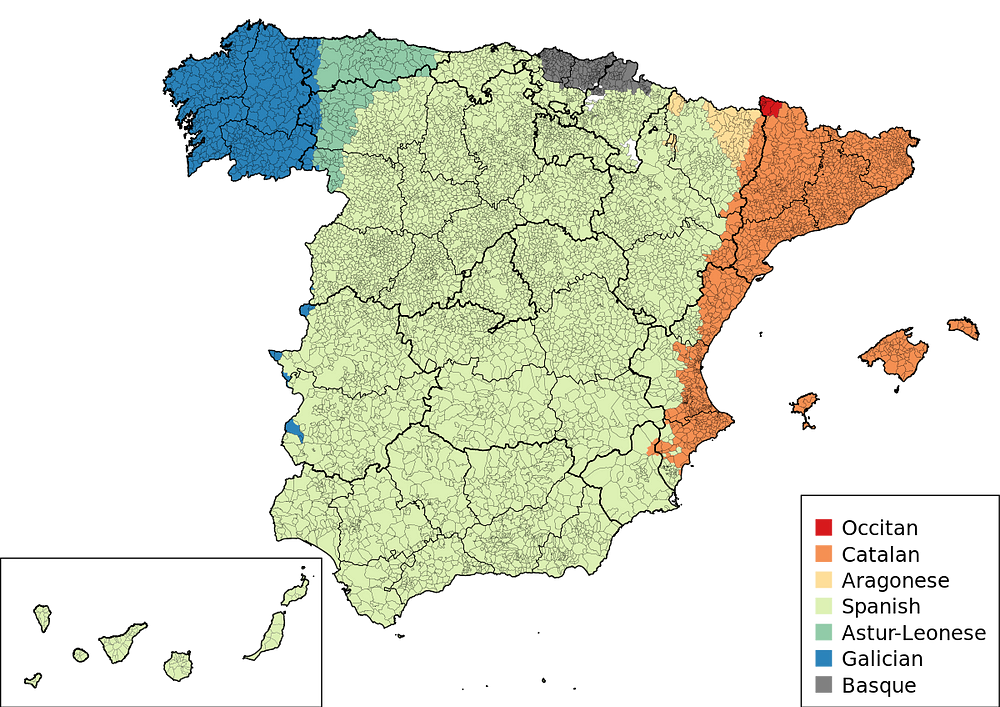
    Witches Sabbath, 1798| Francisco de Goya (Left); Map of Languages of Spain| Wikicommons (Right)

    The Basques were persecuted well into the 20th century when dictator Francisco Franco sought to create a homogenous Spanish culture and attempted to exorcise unique ethnic groups and cultures such as Basque and Catalan. But after the death of Franco in 1975, the scars of his regime slowly healed as the percentage of Basque speakers increased from 24.1% of the population of the region of Basque Country in 1991 to 43.3% in 2021, with the largest increase being shown in the age range of 16–24.

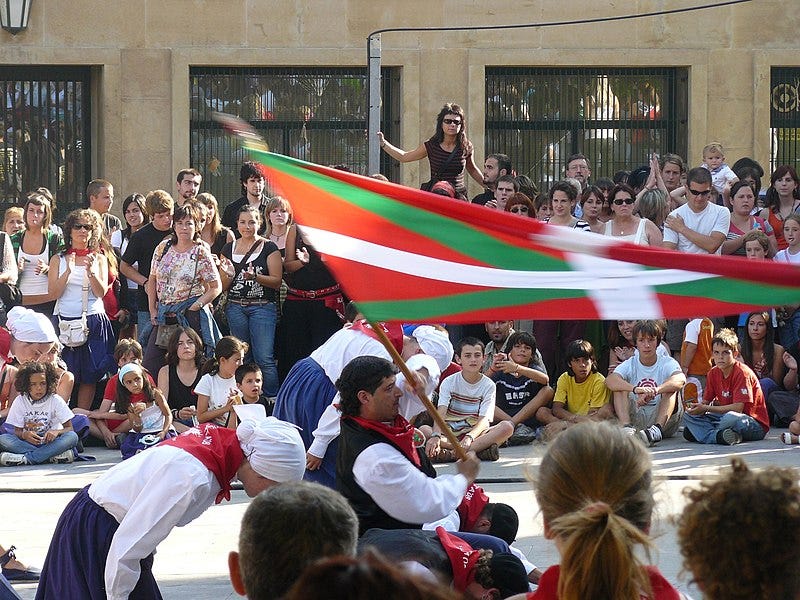
    Basque Festival|Wikicommons


    Dancing in the Glory of Monsters: The Collapse of the Congo and the Great War of Africa Congo Crisis 1

     Dancing in the Glory of Monsters  The Congo Part 1 The Congo Crisis  What is officially known as the Congo Crisis began in 1960 and ended i...