-Munero is an acclaimed short story writer from London Ontario. She won the Nobel Prize for Literature in 2013. Miles City, Montana was read. It began slow, but an ominous tension. It is about chance as well as the choices and paths taken in life. The story is for the patient, but she builds up steam as it progresses. Nonlinearity is present in this story as is in many of her stories.
Film and Television
Twin Peaks
-Season 2 has more filler than season 1.
Ballad of Buster Scruggs
-Some good stories but the movie often suffers from pacing issues. Whether too fast or slow. The second and fifth stories are the best, and the first is the worst.
Last week I took a moderate interest in Tuareg music. The genre known as Tishoumaren (from the French chomeur meaning unemployed)
Mdou Moctar - Tarhatazed
Tishoumaren
This song is electric. I have no idea what the Tuareg lyrics are about but I like to believe it's about an ancient magic that conjures a sandstorm in the face of a serpent in the Sahara night, swirling and fluttering through the night's stars. The change-up at 4:28 is a favorite part among many.
-Borges is an author of the infinite. The Gospel According to Mark(!!!) and Circular Ruins were read. Fables for adults the former deals with the ingraining of myth through time and the latter with dreams and reality.
-Romance with a Contrabass is a funny story worth reading about two people who are going to a wedding:A contrabass player and the bride. Unfortunate events happen in a humourous fashion.
Twain
-Huckleberry Finn was begun, and a few chapters were read.
Film and Television
Twin Peaks
-The surreal murder mystery show that somehow manages to divert from being about a murder mystery.
Rosemary's Baby
One of the greatest movies ever. The increasingly claustrophobic and banal nature of the movie is where the true horror is felt.
Blogger issues plagued this week which resulted in deleted entries.
Music
First Opus: Sinjin Hawke (2017)
Sounding like the theophany of some celestial mass, shimmering embellishments and manipulated vocals define this occasionally rambunctious, often ethereal electronic album.
Film and Television
A River Runs Through It (1992)
A homely family drama about identity, family and my state Montana. Fishing and rivers serve as metaphors for this old demonstration of Protestant Values
7/10
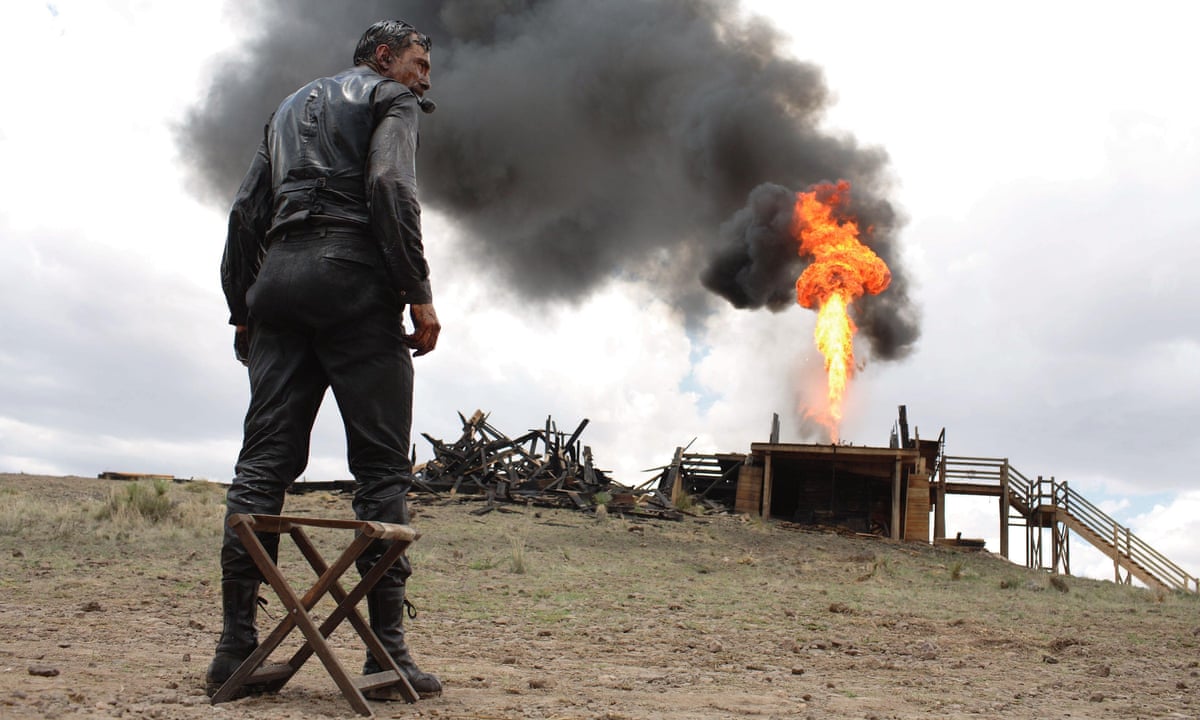
There Will Be Blood (2007)
Concerning the rise of oil prospector Daniel Plainview (Daniel Day-Lewis) in early 20th century California. There Will Be Blood is an excellent parable about a world where greed and capitalism always are. But the tale is not only rife with biblical imagery but has a plot that juxtaposes the psychopathic capitalist (Daniel Day Lewis) and the conniving preacher (Paul Dano). Their stories merge and progress in tandem, yet ultimately are antagonistic to each other. The acting is exceptional, and the imagery is striking. An ominous and detached tone veils the film. Exceptional.
The year is 529 B.C, Cyrus the Great has united most of the Persian and Median Tribes and founded the Achaemenid Persian Empire.
He has conquered the ancient kingdoms of Assyria and Babylon granting himself the ancient Assyrian title of King of Kings. Having created the largest empire of its time stretching from modern Turkey to Afghanistan, he now sets his sights north, to the vast Eurasian steppe in present-day Kazakhstan and Uzbekistan, and marches to a conflict that will be his last.
Scythians and the Massagetae
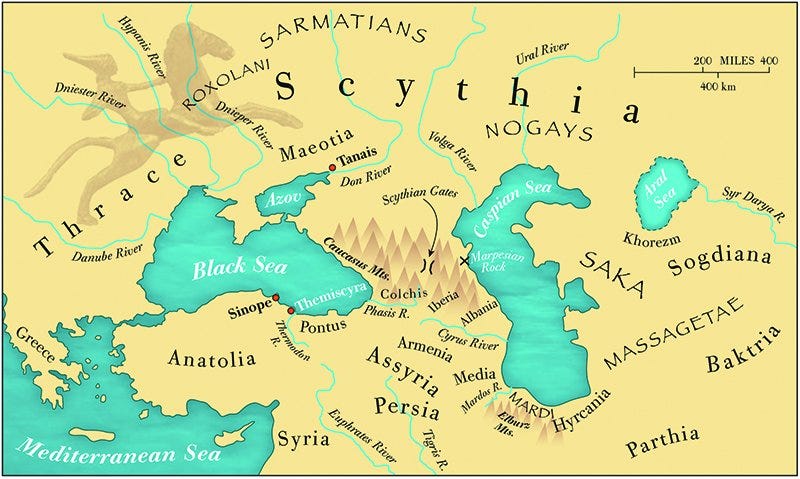
In southern Kazakhstan, east of the Caspian Sea roamed a group of nomads known as the Massagetae. They were a Scythian people who spoke a language closely related to the Indo-Iranian of the time and frequently interacted with the more “civilized” kingdoms and empires they encountered. They were skilled horse riders and treated their horses spiritually, often burying them with adorned garments and treasures.
Map of Ancient Scythia|Michele Angel
The Massagetae were described a war-like people, who may have consumed cannabis.They primarily drank fermented mare’s milk and ate from their livestock. When a Massagetae man was too old to care for they would kill him with his “beasts of flock” and cook the combined flesh to eat. This was said to be a desired death, while the Massagetae who died of sickness were not eaten but buried and lamented.
Scythian Art|Public Domain
Cyrus’s conquests
The following is an account of ancient history as told by the “Father of History”, Herodotus of Halicarnassus. As with all ancient history, the veracity is debated.
Just before 530 B.C., Cyrus the Great in an attempt to extend his dominion offered to marry the then-widowed queen of the Massagetae, Tomyris. Knowing very well that Cyrus wanted to wed her to subjugate her people to Persian rule, Tomyris refused Cyrus’s advances.
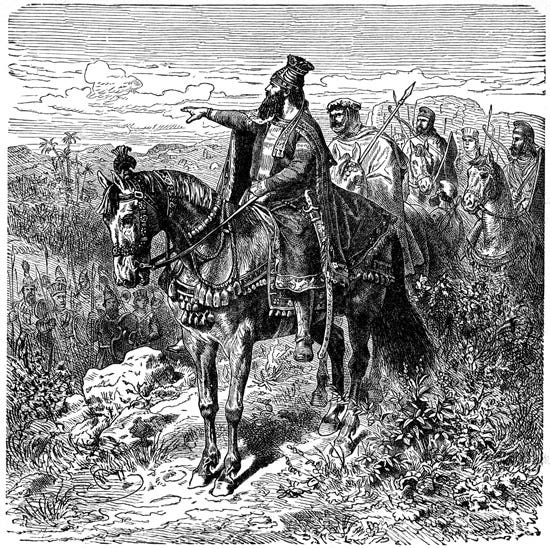
This prompted the King of Kings to advance directly towards the Massagetae in an attempt to conquer and integrate the Massagetae into his mighty empire. As he prepared for his assault, Tomyris sent Cyrus a messenger telling the King to cease his conquest and return to his own country or suffer battle with the Massagetae.
Drawing of Cyrus and his army 1894| Public Domain
Cyrus consulted with his advisors and after much discussion, they decided that they would set a trap for the Massagetae army. Leaving a small force of Persians as bait, the Persians littered their camp with provisions, most notably large amounts of wine.
When the Massagetae army, under the leadership of Tomyris’s son Spargapises attacked and defeated the small force of soldiers left behind, they began to feast on the Persian provisions. Unused to the effects of alcohol, the Massagetae quickly became inebriated, and the main Persian force arrived and easily defeated the drunk Massagetae.
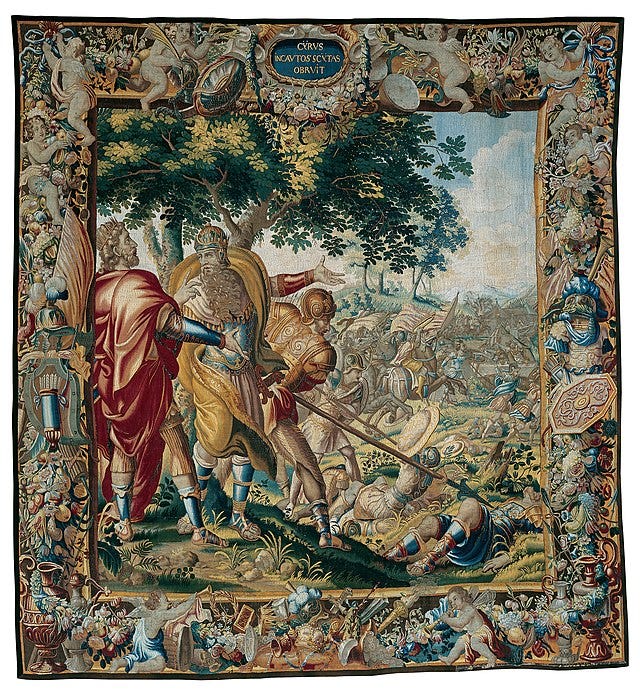
Cyrus took Spargapises hostage and planned to use him as ransom to pacify the Massagetae. Tomyris when realizing this sent a message offering Cyrus an ultimatum. Should he return Spargapises unharmed, Tomyris would allow Cyrus to “depart unpunished” from her lands even after all the destruction he caused the Massagetae. But should continue his conquest, Tomyris will give Cyrus the “fill of blood that he is so insatiated for”.
Cyrus defeats Spargapises, 1670| Albert Auwercx
Cyrus and his advisors were unsure how to continue, however, when the imprisoned Spargapises sobered up and realized his predicament he asked if he could become unbound in his cell. Once unbound, Spargapises managed to commit suicide.
Cyrus did not have his bargaining piece anymore and the Persian army was stretched in an unfamiliar, hostile land. Tomyris rallied all the tribes that aligned themselves with the Massagetae, and the two armies waged one final battle
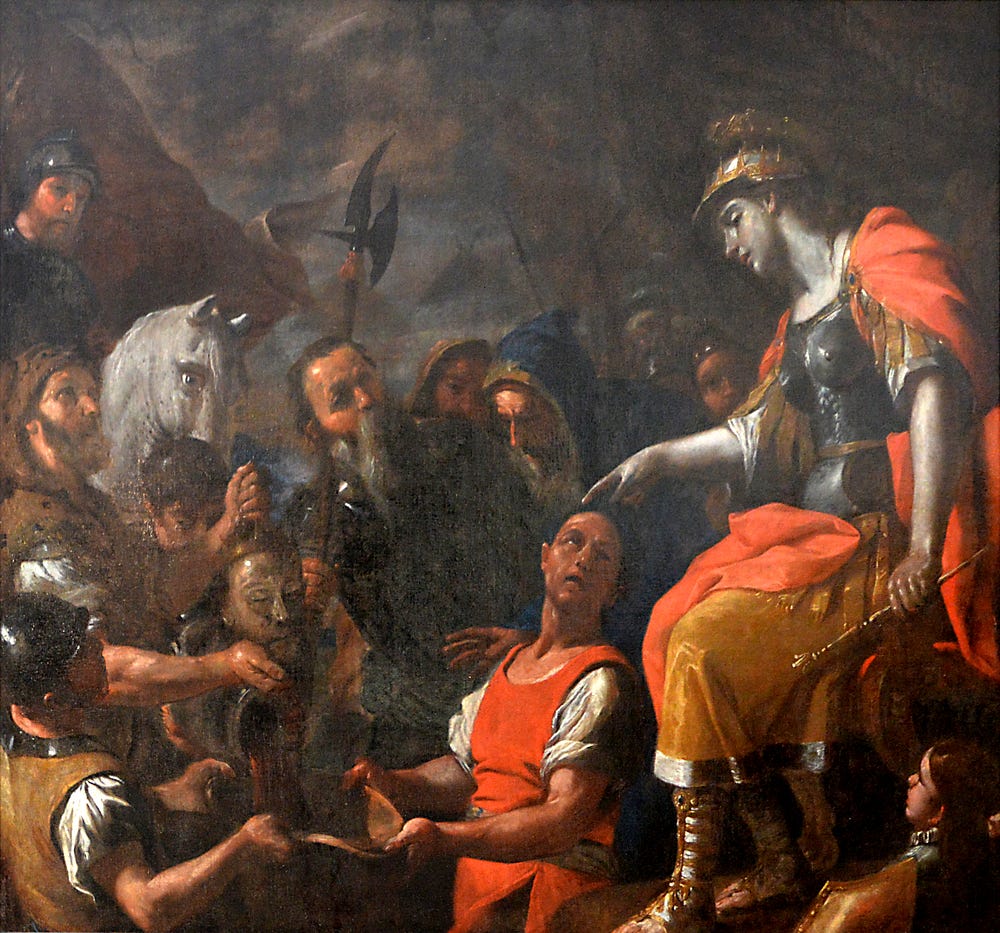
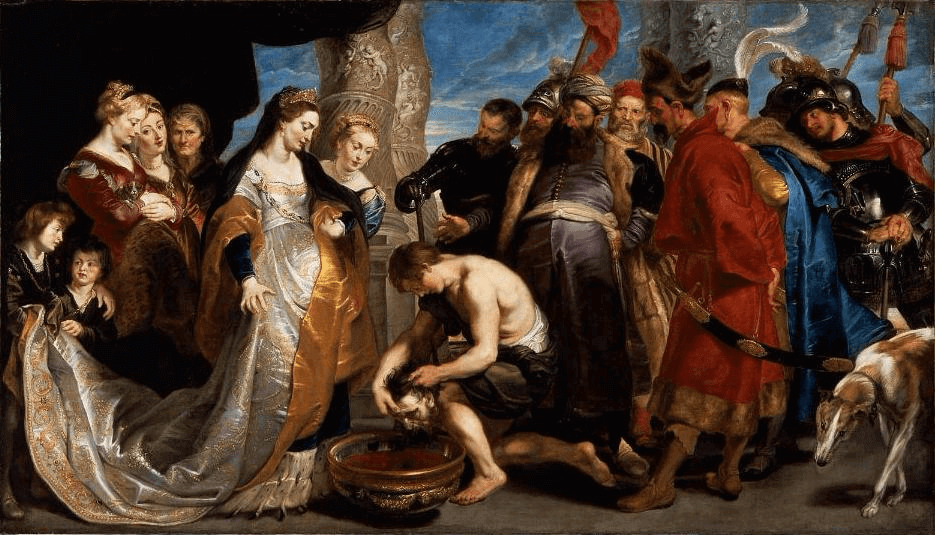
The battle was said to be one of the “stubbornest of all fights that were ever fought by men that were not Greek”, however eventually the Massagetae prevailed and a substantial portion of the Persian army perished. Cyrus was slain and Tomyris had his head severed and stuffed in a wineskin bag.
Herodotus then concludes the account with Tomyris declaring “Though I live and conquer thee, thou hast undone me, overcoming my son by guile; but even as I threatened, so will I do, and give thee thy fill of blood.”
Queen Tomyris and the head of Cyrus the Great, 1692| Mattia Preti
Tomyris in legend
With renewed interest in classical history and literature during the Renaissance era, Tomyris became a culturally significant character and her supposed defeat of Cyrus has inspired many cultural references, even as much as being referenced in Shakespeare’s King Henry Part 1 in the following passage:
The plot is laid: if all things fall out right, I shall as famous be by this exploit As Scythian Tomyris by Cyrus’ death.
Tomyris’s legendary feats captured a developing theme of female empowerment and triumph over powerful men, which became increasingly popular during the Renaissance.
Tomyris receiving the head of Cyrus, 1622| Peter Paul Rubens
A conclusion on the veracity and Herodotus’s potential bias
A note on the veracity of Herodotus’s story must be emphasized. As in all ancient history, it is very difficult to accurately conclude what did happen, we can only take what was said at the time and supposed facts and artifacts as evidence.
Many modern and ancient historians after Herodotus believe that Cyrus may not have been slain in battle and if he was, he was not decapitated as we can point to Cyrus’s tomb which supposedly does hold his remains. If we believe this tomb to truly hold his remains, Alexander the Great made no comment on Cyrus being beheaded when he visited his tomb.
It is hard to believe that Cyrus’s body was not recovered, considering his stature and the sophistication of the empire he created. Furthermore, Herodotus was believed to be opposed to the Persian rule of the Greek city-states, so much so that a romanticized account in a 10th-century Byzantine text called the Suda references Herodotus leading a revolt against the Persian rule in Halicarnassus.
Cyrus’s tomb in Pasargadae Iran| Public Domain
Still, all ancient histories remain murky as the annals of history age and expand. Tomyris’s triumph, whether true or fictive, remains one of the many occurrences that show that even the greatest of rulers can be defeated by overextending their reach and underestimating their foreign adversaries.
Sources
Herodotus. Histories. Cambridge University Press, 2017.
Scythian.Encyclopædia Britannica Online. Encyclopædia Britannica, Inc. Retrieved October 4, 2019.
The red sun gleamed through the dark leaves of the rainforest as birds fluttered from their branches at the approach of the party of hunters who forged a path through the jungle, snaking through the vines and flora of the exotic forest, following the tracks of the beast they were pursuing into the belly of the wilderness.
“It’s getting late,” one of the men in the rear shouted. “The sun will begin to set. It is best we call off this expedition”.
“We cannot call it off now,” the expedition’s leader replied, as he carved through shrubs with a machete. “Not when we have gone so far, not after what that beast did to our village. The dark is no concern, we have lanterns and plenty of fuel and resources.”
“I still think it would be prudent to circle back. Few of us are familiar with this forest. We do not want to become lost in this land during the night. Nature can be hostile to newcomers. Let us head back while we still can.”
“Desert then, I don’t want cravens in my company,” the leader retorted. “Just know that those who desert will be branded the lowliest of cowards and will bring shame to their tribe and descendants for centuries. When we return with the beast’s head, you will be fortunate to escape with just a lashing.”
But even after the austere threats of the steadfast commander, as the evening approached even his most fervent followers began to doubt the mission, and the hunting party, like the skin of an aging serpent, began to shed its weight. The tracks they were following began to fade. Soon, they were marching without a trail. The sun was beginning to set and the night would need attending to.
The party stopped to prepare lanterns. The group looked intently at their leader. The leader himself was beginning to doubt whether they should continue or head back. It had seemed such an easy task to track down this beast earlier that day, but now it was looking like the obstinate commander would have to admit defeat and return to the village a failure and a blowhard, his biggest fear. Just as the leader began to formulate how he would justify his withdrawal, a hunter shouted, “Over here!”
The party assembled around the hunter. What he found was enough to restore faith in the expedition. A score of paces away from the carved path seeped a stream beside which lay a goat carcass.
“That’s the goat that went missing this morning, no doubt of it,” a hunter said, uncertain whether it was good or bad news.
“It is,” the leader said, now back to his headstrong veneer, relieved the expedition may be a success after all. “We are sure to be near now. Look, the blood is still wet, and the bite marks are fresh.”
With replenished fortitude, the band lit their lanterns and followed the fresh tracks along the stream. It did not take long before they found what they were searching for. In a small alcove where the stream spawned, lay the beast on its side. Slowly and silently the hunters formed a semicircle and approached it. It was about a spear length long with long lean limbs, a thin matte brown pelt, and a feline face that bore two prominent teeth long as daggers. The hunters were a spear’s throw away when one whispered what all were thinking.
“I think it’s dead”.
“It would appear,” the leader murmured. But just in case, he threw his spear into the abdomen of the feline, confirming their beliefs. “We can’t know how she died but go on and give her a go, we’ve earned it. It’s no doubt that she died from our pursuit. It would not be false to say we killed her. Make it look believable but don’t damage her pelt too much. I plan to keep that.” The other hunters all gave the feline a thrust with their spears. A lacklustre end to their hunt, but it was better than returning empty-handed.
“Shall we camp, and return come morning?” one member asked the leader.
“No, we are heading back tonight with the beast. We know the path back and will arrive before high moon. Get a drink from the spring to replenish yourselves; we will depart shortly.”
The beast’s corpse was then placed on a pallet bed and the men drank from the spring. Black as ink, the spring was a sombre watering hole. The men began to talk of how they would split the spoils and what they would do to the deserters when one of the men briefly coughed and then retched. Alarmed, his comrades went by his side, but the retching would not stop. Soon, others began to vomit violently and gasp for breath.
“The water! Don’t drink the water!” the leader shouted as he tried to purge the water from his body.
Then from the recesses of the shadowy alcove, something sinister stirred. The water swelled and rippled as a pall of silence fell over the disoriented men. Two orange eyes of evil, like blazing skulls, beamed rays of infernal malice through the murk at the frightened souls. And with the hiss of a forked tongue, the hunt began once more.